Lions Mane Mushroom Crab Cake Recipe
It’s funny when asked to write about my foraged lion’s mane mushroom crab cake recipe for the SCT blog, I instantly thought about all the times I tried to look up a recipe for something and grumbled at the pages and pages I had to scroll through of backstory on why this was the blogger’s favorite recipe, stemming back from their childhood home in the hills of wherever and said I wasn’t going to do that… And yet here I am. But wait! Don’t go! This is important. There are things you should probably know about mushrooms and foraging in general before you take to the forests, looking for fungus to cook up for your family, or before turning away because you don’t want to accidentally consume some highly toxic mushroom by mistake!
Let’s start with the fearful: YOU CAN DO THIS TOO! When I started to feel comfortable identifying mushrooms, I’d come across so many chanterelles, oysters, wood ear, and other delicious edible mushrooms on my hikes but would leave them, doubting myself. What I learned almost immediately was that there are very few mushrooms in Georgia that will actually kill you. The most toxic mushrooms, such as Deathcaps, skullcaps, and webcaps are not typically seen in the Southeast but are more so found in Europe and Asia. The only deadly one in the continental US (that I could find in a google search) is the Destroying angel (Amanita verna). A little scary because it does resemble edible button mushrooms, but in this case, I’d just pass up buttons to be safe. Besides, buttons are like totally boring mushrooms that you can get in the store for pretty cheap. Hardly worth risking your life for! Other delicious mushrooms like chicken of the woods and lion’s mane are pretty hard to mistake for anything else after a little practice and the reward for getting it right can be so very tasty!
For those of you ready to take to the woods and scoop up everything resembling a mushroom, heed this gentle warning: there is no substitute for study and practice. Although, after joining a few mushrooming groups and consulting several apps and ID guides, I still get some things wrong. And that’s okay. That’s what these resources are for! My best friend is the Georgia Mushrooming group on Facebook. I joined about three years ago now, checking out the photos, spore prints, funny posts, recipes, and most importantly, identifications which often include a “compare to” some similar species just to be sure, and learned SO much. Make friends, go with a buddy, take a “melfie” or mushroom selfie, post your findings in these mushroom groups and most of all have fun!
A few more tips before your go: be wary of foraging too close to the road. Runoff water containing oil, gasoline, and other car byproducts can completely ruin even the tastiest of finds. Check for animal wastes and poison ivy before harvesting to be sure you have a ready to prepare mushroom. A lot can be cleaned off but even in the best of conditions, you may find that some invertebrate friends got to your prize before you. Some expert foragers suggest brushing off most of the bugs and cooking it up anyway but I’ll let you make that call. Make sure you have permission to harvest on land that doesn’t belong to you. I’ve read some crazy stories! Some mushrooms are seasonal, so study up on when to look for what! And last but not least, remember: the rain is your friend! The best time to forage is after a good rain. I hope that wasn’t too painful to sit through!
And without further ado, my Lion’s Mane Crab Cake Recipe:
Servings: Makes 6 large crab cakes
Prep Time: 15 Minutes
Cook Time: 20 Minutes
Total Time: 35 Minutes
INGREDIENTS FOR THE CRAB CAKES
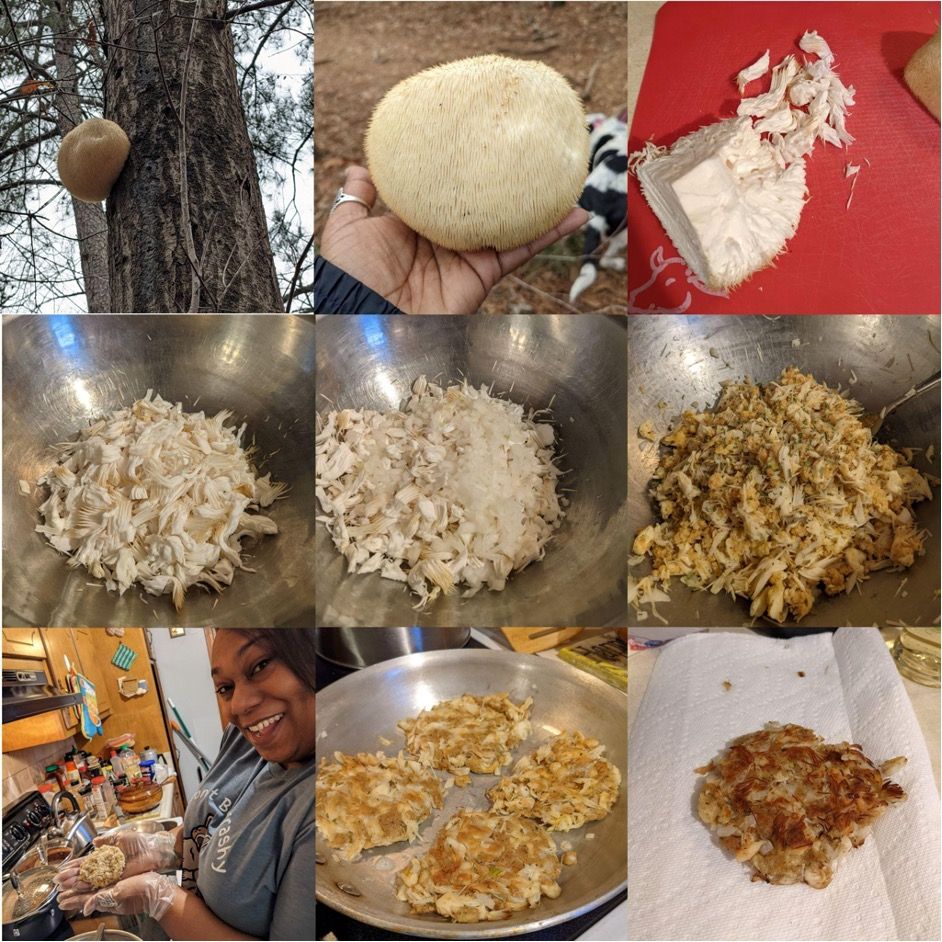
1 medium-sized Lion’s Mane Mushroom (see photo for size reference)
2 large eggs
1 small diced onion
2-1/2 tablespoons mayonnaise
1-1/2 teaspoons Dijon mustard
1 teaspoon Worcestershire sauce
1 teaspoon Old Bay seasoning
1/4 teaspoon salt & pepper
2 tablespoons finely chopped fresh parsley
1/2 cup crushed saltines or bread crumbs of choice
Vegetable or olive oil, for cooking
PREPARE THE LION’S MANE
DO NOT WASH your lion’s mane! Like a lot of mushrooms, it’s a very absorbent mushroom and will become waterlogged if you wash it. Instead, use a brush to get rid of any debris between the “teeth.”
If you jumped the gun and washed your mushroom before reading the directions (stares in teacher voice), you may need to wring it out and set on a paper towel to absorb the excess water
Tear the lion’s mane mushroom into small pieces, about the size of crab chunks, and place in a bowl.
I used a knife to chop it up a bit more
CRAB CAKES
Combine the eggs, onion, mayonnaise, Dijon mustard, Worcestershire, Old Bay, salt, pepper, and parsley in a large bowl and mix well.
Add the lion’s mane chunks and crushed crackers or breadcrumbs of choice
Using a rubber spatula, fold the mixture together until well combined.
Shape into 6ish cakes (each about ½ cup).
Preheat a large nonstick pan over medium heat and coat with oil.
When the oil is hot, place the crab cakes in the pan and cook until golden brown, 3 to 5 minutes per side.
(For liability purposes) Be careful as hot oil may splatter.
Serve the crab cakes warm with tartar or dipping sauce of your choice.
ABOUT CHARLEE
Charlee Glenn joined the Southern Conservation Trust team in June of 2021 as the Environmental Education Coordinator. She has a B.S. in Biology from Clayton State University and over 10 years of experience teaching Environmental Education, and has worked for several amazing organizations. Charlee develops and implements animal, environmental, and outdoor education programs on-site and at several nature areas managed by SCT.
The post Lions Mane Mushroom Crab Cake Recipe appeared first on Southern Conservation Trust.
Press & Media Inquiries
Contact Us
About Southern Conservation Trust
At Southern Conservation Trust, we are passionate about elevating nature through exceptional stewardship. Based in Georgia, our 501(c)(3) public charity has successfully conserved over 65,000 acres of land across the Southeast, including five public nature areas in Fayette County and the Fayette Environmental Education Center. We believe that protecting our natural spaces is just the beginning; everyone should have equal access to enjoy the beauty of the outdoors. Join us in our mission to foster a deeper connection between people and nature. Learn more at www.sctlandtrust.org.
Share Post
Recent Articles & Blogs